

Interesting Psychology Of Discovery And How It Changes Us
Discovery And How It Changes Us
Psychology Of Discovery – The Human Drive To Uncover Meaning
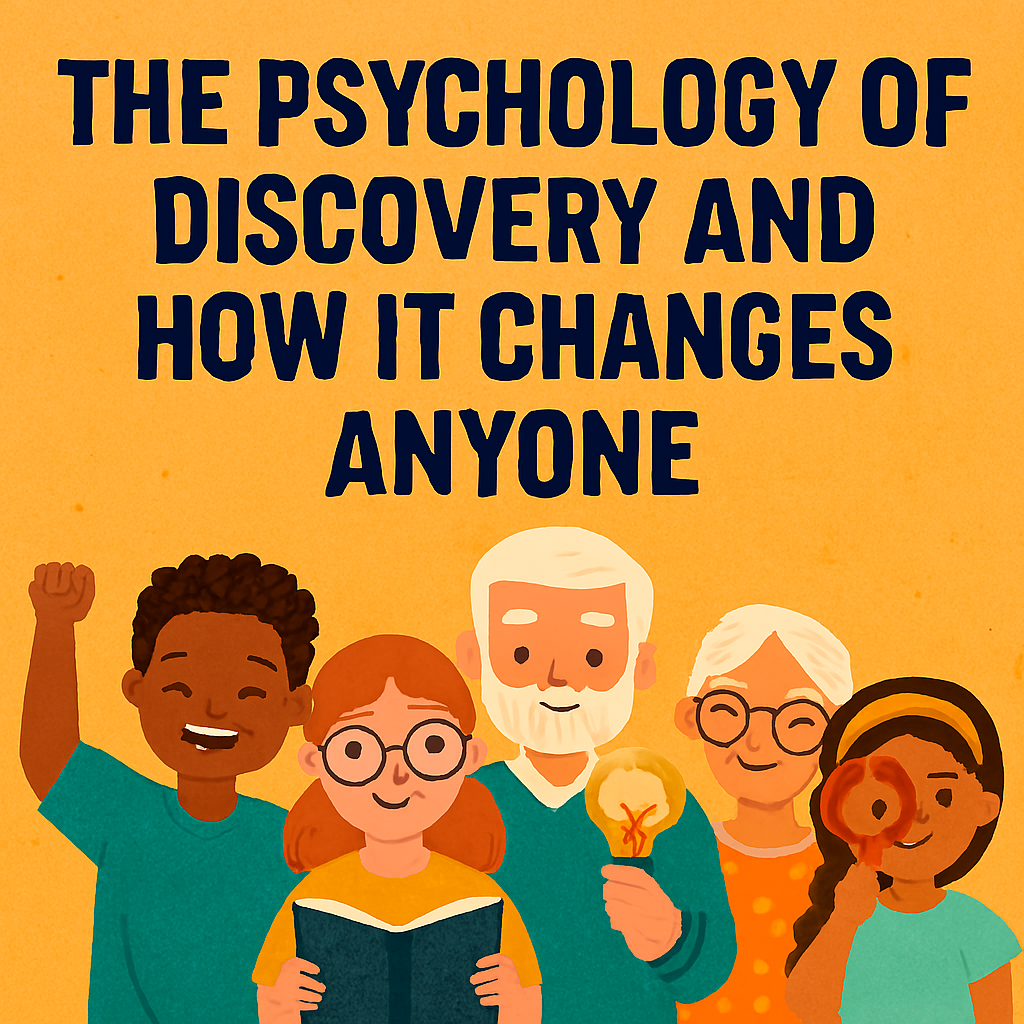
Discovery is one of the most profound forces shaping human psychology. It is not limited to scientific breakthroughs or geographic exploration but extends to personal revelations, cultural encounters, and intellectual insights. Each act of discovery alters the way individuals perceive themselves and the world around them. Psychologists emphasize that discovery stimulates curiosity, strengthens memory, and enhances emotional resilience. The process of uncovering something new often triggers dopamine release, reinforcing motivation and joy. Discovery also challenges existing beliefs, encouraging adaptability and cognitive flexibility.
It can be both exhilarating and unsettling, as it requires confronting the unknown. The act of discovery is inherently social, often shared through storytelling, teaching, or collaboration. This sharing magnifies its impact, embedding discoveries into collective memory. Ultimately, discovery is not just about finding something new but about transforming the discoverer.
The Emotional Impact Of Discovery – Joy And Anxiety
Discovery evokes a complex blend of emotions that range from excitement to fear. The joy of uncovering something previously hidden can create lasting memories and a sense of achievement. At the same time, anxiety often accompanies discovery because it involves uncertainty and risk. Psychologists note that this tension between joy and anxiety is essential for growth. Without discomfort, discovery would not challenge the mind or expand perspectives.
Emotional responses to discovery vary depending on context, such as whether the discovery is personal, scientific, or cultural. Joy tends to dominate when discoveries align with expectations, while anxiety rises when they disrupt established beliefs. The balance of these emotions determines whether discovery leads to empowerment or resistance. Emotional resilience allows individuals to embrace discovery despite its challenges. This resilience is cultivated through repeated exposure to novelty. Over time, discovery becomes less intimidating and more rewarding.
| Emotional Response | Description | Psychological Effect |
|---|---|---|
| Joy | Excitement and pleasure from novelty | Enhances motivation and memory |
| Anxiety | Fear of uncertainty or disruption | Encourages caution and reflection |
| Surprise | Unexpected outcomes | Stimulates curiosity and learning |
| Awe | Profound wonder | Expands perspective and humility |
| Confusion | Lack of clarity | Promotes deeper inquiry |
The Cognitive Transformation Of Discovery – Expanding Mental Models
Discovery reshapes the way people think by expanding mental models. Cognitive psychology explains that mental models are frameworks used to interpret reality. When individuals encounter new information, these models must adapt. This adaptation strengthens problem-solving skills and creativity. Discovery forces the brain to reconcile contradictions, leading to more sophisticated reasoning. It also enhances memory consolidation, as novel experiences are more likely to be remembered. Cognitive transformation through discovery is not instantaneous but gradual. Each new insight builds upon previous knowledge, creating cumulative growth. This process is essential for innovation, as it allows individuals to connect disparate ideas. Ultimately, discovery transforms cognition by making the mind more flexible and capable of handling complexity.
- Discovery expands mental models and challenges assumptions
- Novelty strengthens memory consolidation and retention
- Contradictions encourage advanced reasoning and problem-solving
- Adaptation fosters creativity and innovation
- Cumulative insights build intellectual growth
- Exposure to discovery enhances cognitive flexibility
- Mental models evolve with each new revelation
- Discovery promotes resilience in thinking
- Curiosity drives deeper cognitive engagement
- Transformation occurs gradually but profoundly
The Social Dimension Of Discovery – Sharing And Collaboration
Discovery is rarely an isolated act because humans are social beings. Sharing discoveries with others amplifies their impact and creates collective knowledge. Collaboration in discovery fosters trust, empathy, and mutual respect. Social psychology highlights that group discovery strengthens bonds and builds communities. When discoveries are shared, they become part of cultural narratives that shape identity. Collaboration also reduces the risks associated with discovery by distributing responsibility. Social reinforcement encourages individuals to continue exploring and learning. The act of teaching discoveries to others deepens understanding for both teacher and learner. Collective discovery often leads to innovation that surpasses individual achievements. In this way, discovery is both personal and communal, shaping societies as much as individuals.
| Social Aspect | Role In Discovery | Outcome |
|---|---|---|
| Collaboration | Joint exploration | Innovation and trust |
| Storytelling | Sharing insights | Cultural memory |
| Teaching | Explaining discoveries | Deeper understanding |
| Community | Collective discovery | Shared identity |
| Reinforcement | Encouragement from peers | Sustained curiosity |
The Psychological Risks Of Discovery – Fear And Resistance
Discovery is not always welcomed, as it can provoke fear and resistance. People often cling to familiar beliefs and routines, making new revelations unsettling. Psychological defense mechanisms such as denial or rationalization may arise. Resistance to discovery can slow progress but also protect stability. Fear of discovery is particularly strong when it challenges identity or values. This fear can manifest as avoidance, skepticism, or hostility. However, resistance is not inherently negative, as it forces careful evaluation of new information. Psychologists argue that resistance ensures discoveries are integrated thoughtfully. Overcoming fear requires emotional resilience and openness to change. Ultimately, the risks of discovery highlight its transformative power.
- Fear arises when discovery disrupts identity
- Resistance protects stability but slows progress
- Defense mechanisms include denial and rationalization
- Avoidance and skepticism are common responses
- Hostility may emerge against disruptive discoveries
- Resistance ensures careful integration of insights
- Emotional resilience helps overcome fear
- Openness to change reduces psychological risks
- Fear highlights the transformative nature of discovery
- Discovery requires courage to embrace uncertainty
The Role Of Curiosity In Discovery – Motivation And Exploration
Curiosity is the psychological engine that drives discovery. It motivates individuals to push own barriers and try too seek out new experiences and knowledge. Curiosity enhances learning by making exploration rewarding. Psychologists describe curiosity as a blend of interest and uncertainty. This blend creates a powerful incentive to uncover the unknown. Curiosity also strengthens persistence, as individuals continue searching despite obstacles. It is closely linked to creativity, as curiosity encourages experimentation. Discovery without curiosity would be accidental rather than intentional. Cultivating curiosity is essential for lifelong learning. Ultimately, curiosity transforms discovery into a deliberate and meaningful process.
| Aspect Of Curiosity | Psychological Role | Impact On Discovery |
|---|---|---|
| Interest | Drives engagement | Sustains exploration |
| Uncertainty | Creates tension | Motivates inquiry |
| Persistence | Overcomes obstacles | Ensures progress |
| Creativity | Encourages experimentation | Generates innovation |
| Reward | Reinforces learning | Strengthens memory |
The Identity Shift Of Discovery – Redefining Self
Discovery often leads to profound changes in identity. When individuals uncover new truths, they must reconcile them with their self-concept. This reconciliation can be empowering or destabilizing. Identity shifts occur when discoveries challenge long-held beliefs. Psychologists emphasize that identity is dynamic and evolves through discovery. Personal revelations, such as realizing hidden talents, reshape self-perception. Cultural discoveries expand identity by connecting individuals to broader communities. Identity shifts are often accompanied by emotional turbulence. However, they ultimately lead to growth and authenticity. Discovery thus becomes a catalyst for redefining who we are.
- Discovery challenges long-held beliefs
- Identity evolves through new insights
- Self-concept adapts to revelations
- Empowerment arises from personal discoveries
- Cultural encounters expand identity
- Emotional turbulence accompanies shifts
- Growth emerges from adaptation
- Authenticity strengthens through discovery
- Identity is dynamic and fluid
- Discovery redefines self-perception
The Role Of Memory In Discovery – Retention And Recall
Discovery is deeply tied to memory because new experiences are more likely to be remembered. Psychologists explain that novelty strengthens encoding, making discoveries easier to recall later. This retention ensures that discoveries influence future decisions and behaviors. Memory also allows discoveries to be shared across generations, creating cultural continuity. The act of recalling discoveries reinforces their emotional significance. Memory is not static but reconstructive, meaning discoveries are reinterpreted over time. This reinterpretation can alter the meaning of past discoveries. Discovery therefore shapes both immediate memory and long-term identity. Without memory, discovery would lose its transformative power. Memory ensures that discovery continues to shape lives long after the initial event.
| Memory Aspect | Role In Discovery | Impact |
|---|---|---|
| Encoding | Strengthens retention | Ensures recall of discoveries |
| Recall | Reinforces meaning | Deepens emotional impact |
| Reconstruction | Alters interpretation | Evolves significance |
| Continuity | Shares across generations | Builds cultural identity |
| Influence | Guides decisions | Shapes future behavior |
The Role Of Imagination In Discovery – Creativity And Vision
Imagination is essential for discovery because it allows individuals to envision possibilities beyond current reality. Psychologists argue that imagination bridges the gap between known and unknown. It enables creative problem-solving by generating novel ideas. Imagination also enhances resilience, as it provides alternative perspectives during challenges. Discovery without imagination would be limited to observation rather than innovation. Visionary thinkers rely on imagination to anticipate future discoveries. Imagination fosters curiosity by making exploration exciting. It also strengthens emotional engagement, as imagined outcomes inspire motivation. Discovery becomes transformative when imagination expands its scope. Ultimately, imagination ensures that discovery is not just reactive but proactive.
- Imagination bridges known and unknown realities
- Creativity emerges through imaginative exploration
- Visionary thinkers anticipate discoveries with imagination
- Resilience grows from alternative perspectives
- Curiosity is fueled by imaginative possibilities
- Emotional engagement strengthens motivation
- Innovation depends on imaginative problem-solving
- Discovery becomes proactive through imagination
- Imagination expands the scope of exploration
- Transformation arises from visionary thinking
The Cultural Impact Of Discovery – Traditions And Change
Discovery influences culture by reshaping traditions and introducing new practices. Cultural psychology highlights that discoveries become embedded in rituals, stories, and symbols. These cultural integrations ensure that discoveries are preserved and celebrated. At the same time, discovery challenges traditions by introducing change. This tension between preservation and transformation defines cultural evolution. Discoveries in science, art, and technology often spread across cultures, creating global impact. Cultural discovery also fosters empathy by connecting people to diverse perspectives. Traditions adapt to incorporate discoveries, ensuring relevance in modern contexts. Discovery thus becomes a driver of cultural resilience. Ultimately, culture evolves through the interplay of discovery and tradition.
| Cultural Element | Role Of Discovery | Outcome |
|---|---|---|
| Rituals | Embed discoveries | Preserve meaning |
| Stories | Share insights | Build collective memory |
| Symbols | Represent discoveries | Strengthen identity |
| Traditions | Adapt to change | Ensure relevance |
| Global Exchange | Spread discoveries | Foster empathy |
The Role Of Resilience In Discovery – Coping And Growth
Resilience determines how individuals respond to the challenges of discovery. Psychologists define resilience as the ability to adapt to adversity. Discovery often disrupts stability, requiring resilience to cope. Resilient individuals embrace discovery despite uncertainty. They view challenges as opportunities for growth. Resilience also strengthens emotional regulation, reducing fear and anxiety. It fosters persistence, ensuring that discovery continues despite obstacles. Resilience is cultivated through repeated exposure to novelty. Over time, resilience transforms discovery into a source of empowerment. Ultimately, resilience ensures that discovery leads to growth rather than resistance.
- Resilience adapts to adversity in discovery
- Emotional regulation reduces fear and anxiety
- Persistence ensures continued exploration
- Challenges become opportunities for growth
- Resilience embraces uncertainty
- Empowerment arises from resilience
- Repeated exposure cultivates resilience
- Discovery transforms through resilience
- Growth emerges from coping strategies
- Resilience ensures discovery is sustainable
The Role Of Learning In Discovery – Knowledge And Application
Discovery is inseparable from learning because it generates new knowledge. Learning ensures that discoveries are understood and applied. Psychologists emphasize that active learning strengthens retention of discoveries. Application of discoveries transforms them into practical tools. Learning also fosters adaptability by integrating discoveries into daily life. Discovery without learning would remain abstract and unused. Educational systems rely on discovery to inspire curiosity. Learning ensures that discoveries are passed on to future generations. It also enhances creativity by connecting discoveries to existing knowledge. Ultimately, learning makes discovery meaningful and impactful.
| Learning Aspect | Role In Discovery | Impact |
|---|---|---|
| Knowledge | Provides understanding | Strengthens meaning |
| Application | Transforms insights | Creates practical tools |
| Adaptability | Integrates discoveries | Enhances daily life |
| Education | Inspires curiosity | Passes knowledge forward |
| Creativity | Connects insights | Generates innovation |
The Role Of Adaptability In Discovery – Flexibility And Change
Adaptability is crucial for embracing discovery because it requires flexibility. Psychologists explain that adaptability allows individuals to adjust to new realities. Discovery often disrupts routines, making adaptability essential. Flexible thinking ensures that discoveries are integrated smoothly. Adaptability also reduces resistance by encouraging openness. It strengthens problem-solving by allowing multiple perspectives. Discovery without adaptability would provoke fear and rejection. Adaptability fosters resilience by making change less intimidating. It also enhances creativity by encouraging experimentation. Ultimately, adaptability ensures that discovery leads to transformation rather than stagnation.
- Adaptability allows adjustment to new realities
- Flexibility integrates discoveries smoothly
- Resistance is reduced through openness
- Problem-solving strengthens with multiple perspectives
- Fear is minimized by adaptability
- Resilience grows through flexibility
- Creativity emerges from experimentation
- Discovery requires adaptability for transformation
- Change becomes less intimidating with adaptability
- Adaptability prevents stagnation in discovery
The Role Of Reflection In Discovery – Meaning And Integration
Reflection ensures that discoveries are understood and integrated. Psychologists highlight that reflection allows individuals to assign meaning to discoveries. Without reflection, discoveries may remain superficial. Reflection deepens emotional engagement by connecting discoveries to personal values. It also strengthens learning by reinforcing insights. Reflection fosters authenticity by aligning discoveries with identity. It ensures that discoveries are not forgotten but embedded in memory. Reflection also promotes wisdom by encouraging thoughtful evaluation. Discovery becomes transformative when reflection is present. Ultimately, reflection ensures that discovery leads to lasting growth.
| Reflection Aspect | Role In Discovery | Impact |
|---|---|---|
| Meaning | Assigns significance | Deepens engagement |
| Integration | Embeds insights | Strengthens identity |
| Learning | Reinforces knowledge | Enhances retention |
| Authenticity | Aligns with values | Promotes growth |
| Wisdom | Encourages evaluation | Ensures transformation |

The Role Of Perspective In Discovery – Shifts And Insights
Perspective determines how discoveries are interpreted and valued. Psychologists explain that perspective is shaped by culture, experience, and personal beliefs. Discovery often forces individuals to adopt new perspectives, broadening their worldview. These shifts can be empowering, as they reveal possibilities previously unseen. Perspective also influences emotional responses to discovery, shaping whether it is welcomed or resisted. Insights gained through perspective shifts often lead to personal growth. Discovery challenges narrow viewpoints, encouraging openness and empathy. Perspective ensures that discovery is not just about information but about meaning. It transforms discovery into a lens for understanding life. Ultimately, perspective makes discovery deeply personal and universally significant.
| Perspective Element | Role In Discovery | Impact |
|---|---|---|
| Culture | Shapes interpretation | Creates diversity of meaning |
| Experience | Guides responses | Influences emotional impact |
| Beliefs | Determines acceptance | Encourages or resists change |
| Worldview | Expands through discovery | Broadens understanding |
| Insight | Emerges from shifts | Promotes growth |
The Role Of Emotion In Discovery – Depth And Resonance
Emotion gives discovery its depth and resonance. Psychologists highlight that discoveries are remembered more vividly when tied to strong emotions. Joy, awe, and even fear make discoveries impactful. Emotional engagement ensures that discoveries are not forgotten. It also strengthens motivation to continue exploring. Emotion connects discoveries to identity, making them personally meaningful. Resonance occurs when discoveries align with values and aspirations. Emotional depth transforms discovery from mere knowledge into lived experience. Without emotion, discovery would remain abstract and detached. Ultimately, emotion ensures that discovery touches both mind and heart.
- Emotion gives discovery depth and resonance
- Strong emotions make discoveries memorable
- Joy and awe enhance impact
- Fear strengthens caution and reflection
- Emotional engagement ensures retention
- Motivation grows through emotional connection
- Identity is shaped by emotional discoveries
- Resonance aligns discoveries with values
- Lived experience emerges from emotional depth
- Discovery touches both mind and heart
The Role Of Transformation In Discovery – Growth And Renewal
Discovery is transformative because it reshapes identity, cognition, and society. Psychologists argue that transformation occurs when discoveries are integrated into daily life. Growth emerges as individuals adapt to new realities. Renewal happens when discoveries inspire fresh perspectives and actions. Transformation is not always comfortable, as it requires change. However, discomfort is essential for growth. Discovery transforms relationships by fostering empathy and understanding. It also renews communities by introducing innovation. Transformation ensures that discovery is not static but dynamic. Ultimately, discovery changes us by making life richer and more meaningful.
| Transformation Aspect | Role In Discovery | Impact |
|---|---|---|
| Growth | Adapts to new realities | Strengthens resilience |
| Renewal | Inspires fresh perspectives | Encourages innovation |
| Discomfort | Challenges stability | Promotes adaptation |
| Relationships | Foster empathy | Deepen connections |
| Communities | Introduce innovation | Ensure progress |
The Role Of Meaning In Discovery – Purpose And Direction
Meaning gives discovery its purpose and direction. Psychologists emphasize that meaning transforms discovery into more than information. It connects discoveries to values, goals, and identity. Purpose emerges when discoveries inspire action. Direction arises when discoveries guide decisions. Meaning ensures that discoveries are not random but intentional. It strengthens motivation by linking discoveries to aspirations. Meaning also fosters resilience, as individuals endure challenges for purposeful discovery. Without meaning, discovery would lack significance. Meaning transforms discovery into a journey of growth. Ultimately, discovery changes us by giving life deeper purpose.
- Meaning transforms discovery into purpose
- Values connect discoveries to identity
- Goals give discoveries direction
- Purpose inspires action
- Decisions are guided by meaning
- Motivation grows through meaningful discovery
- Resilience strengthens with purposeful exploration
- Significance emerges from meaning
- Growth arises from meaningful journeys
- Discovery gives life deeper purpose
The Spark Of Childhood Discovery
Discovery in childhood is a radiant force that shapes imagination, learning, and emotional growth. Children approach the world with curiosity, turning everyday experiences into opportunities for exploration. Psychologists emphasize that discovery during early years builds resilience, creativity, and empathy. It is not limited to formal education but includes play, friendships, and cultural encounters. Each discovery strengthens memory and encourages adaptability. Childhood discovery is often joyful, filled with wonder and awe. It also teaches children how to cope with uncertainty and change. Discovery becomes a foundation for lifelong learning. Ultimately, childhood discovery is about more than knowledge – it is about shaping identity and purpose.
The Joy Of Playful Discovery – Games And Learning
Play is the primary way children discover the world. Through games, they learn rules, cooperation, and problem-solving. Playful discovery enhances creativity by encouraging experimentation. Psychologists highlight that play strengthens emotional regulation and resilience. It also fosters social skills by teaching empathy and communication. Games provide safe spaces for children to test boundaries. Discovery through play is both fun and educational. It ensures that learning is engaging and memorable. Playful discovery builds confidence and independence. Ultimately, play transforms discovery into joy.
| Play Element | Role In Discovery | Impact |
|---|---|---|
| Games | Teach rules and cooperation | Build social skills |
| Creativity | Encourages experimentation | Strengthens imagination |
| Emotional Regulation | Manages feelings | Builds resilience |
| Communication | Fosters empathy | Enhances relationships |
| Confidence | Grows through play | Promotes independence |
The Curiosity Of Childhood Discovery – Questions And Exploration
Children are naturally curious, asking endless questions about the world. This curiosity drives discovery and learning. Psychologists explain that curiosity enhances memory and problem-solving. Exploration allows children to connect ideas and build knowledge. Curiosity also strengthens persistence, as children seek answers despite obstacles. Discovery through curiosity fosters creativity and innovation. It ensures that learning is active rather than passive. Curiosity makes discovery intentional and meaningful. Ultimately, curiosity is the engine of childhood discovery.
- Curiosity drives discovery and learning
- Questions enhance memory and problem-solving
- Exploration connects ideas and builds knowledge
- Persistence grows through curiosity
- Creativity emerges from exploration
- Innovation is fueled by curiosity
- Learning becomes active and intentional
- Everyday experiences become opportunities for growth
- Curiosity ensures meaningful discovery
- Childhood discovery thrives on curiosity
The Role Of Family In Childhood Discovery – Support And Guidance
Family plays a vital role in shaping childhood discovery. Psychologists emphasize that family encouragement strengthens confidence. Shared discoveries create lasting memories and bonds. Family involvement ensures that discovery is safe and nurturing. It also fosters cultural identity by passing down traditions. Guidance helps children interpret discoveries meaningfully. Family support reduces fear and resistance to change. Discovery becomes a shared journey within families. Ultimately, family transforms discovery into connection.
| Family Element | Role In Discovery | Impact |
|---|---|---|
| Support | Encourages exploration | Builds confidence |
| Guidance | Interprets discoveries | Provides meaning |
| Shared Memories | Strengthens bonds | Creates lasting impact |
| Safety | Ensures nurturing environment | Reduces fear |
| Tradition | Passes cultural identity | Connects generations |
The Role Of School In Childhood Discovery – Learning And Growth
Schools provide structured opportunities for discovery. Teachers guide children through knowledge and skills. It ensures that learning is systematic and comprehensive. Classroom discovery encourages teamwork and empathy. Schools also provide exposure to diverse perspectives. Discovery in school builds resilience by challenging children academically. It strengthens creativity through projects and experiments. School discovery prepares children for future challenges. Ultimately, schools transform discovery into lifelong learning.
- Schools provide structured opportunities for discovery
- Teachers guide knowledge and skills
- Discipline and collaboration are fostered
- Learning becomes systematic and comprehensive
- Teamwork and empathy grow in classrooms
- Diverse perspectives enrich discovery
- Academic challenges build resilience
- Creativity strengthens through projects and experiments
- School discovery prepares for future challenges
- Lifelong learning begins in school

The Role Of Friendship In Childhood Discovery – Sharing And Empathy
Friendship is a powerful context for childhood discovery. Through peers, children learn empathy, cooperation, and trust. Psychologists explain that shared discoveries strengthen social bonds. Friendship encourages risk-taking in safe environments. It also fosters resilience by providing emotional support. Discovery through friendship is joyful and memorable. Friends help interpret discoveries together, deepening meaning. Peer discovery enhances communication skills. It ensures that discovery is social and collaborative. Ultimately, friendship transforms discovery into connection and empathy.
| Friendship Element | Role In Discovery | Impact |
|---|---|---|
| Empathy | Builds understanding | Strengthens bonds |
| Cooperation | Encourages teamwork | Enhances learning |
| Trust | Provides safety | Promotes risk-taking |
| Support | Reduces fear | Builds resilience |
| Shared Joy | Creates memories | Deepens meaning |
The Role Of Imagination In Childhood Discovery – Creativity And Dreams
Imagination is central to childhood discovery. It allows children to envision possibilities beyond reality. Psychologists highlight that imagination fosters creativity and innovation. It strengthens resilience by offering alternative perspectives. Discovery through imagination is joyful and inspiring. Dreams encourage children to explore new ideas. Imagination also enhances emotional engagement. It transforms discovery into a proactive process. Childhood imagination ensures that discovery is limitless. Ultimately, imagination makes discovery magical.
- Imagination fosters creativity and innovation
- Possibilities expand beyond reality
- Resilience grows through alternative perspectives
- Discovery becomes joyful and inspiring
- Dreams encourage exploration
- Emotional engagement strengthens motivation
- Discovery becomes proactive through imagination
- Childhood imagination ensures limitless discovery
- Magic emerges from imaginative exploration
- Imagination makes discovery transformative
Conclusion – The Transformative Power Of Discovery
Discovery is a psychological journey that reshapes emotions, cognition, identity, and society. It evokes joy and anxiety, expands mental models, and strengthens communities. At the same time, it provokes fear and resistance, reminding us of its disruptive potential. Curiosity fuels discovery, making it intentional and rewarding. Identity shifts highlight its personal impact, while collaboration underscores its social dimension. Discovery is not a single event but a continuous process of transformation. Each revelation builds upon the last, creating cumulative growth. The psychology of discovery reveals that it is both exhilarating and challenging. Ultimately, discovery changes us by making us more resilient, adaptable, and connected.
Join The Discussion – Share Your Perspective
Discovery is universal yet deeply personal. How has discovery changed your life, your thinking, or your identity?
#PsychologyOfDiscovery #HumanTransformation #CuriosityAndIdentity #CollectiveKnowledge #EmotionalResilience





2 Comments