
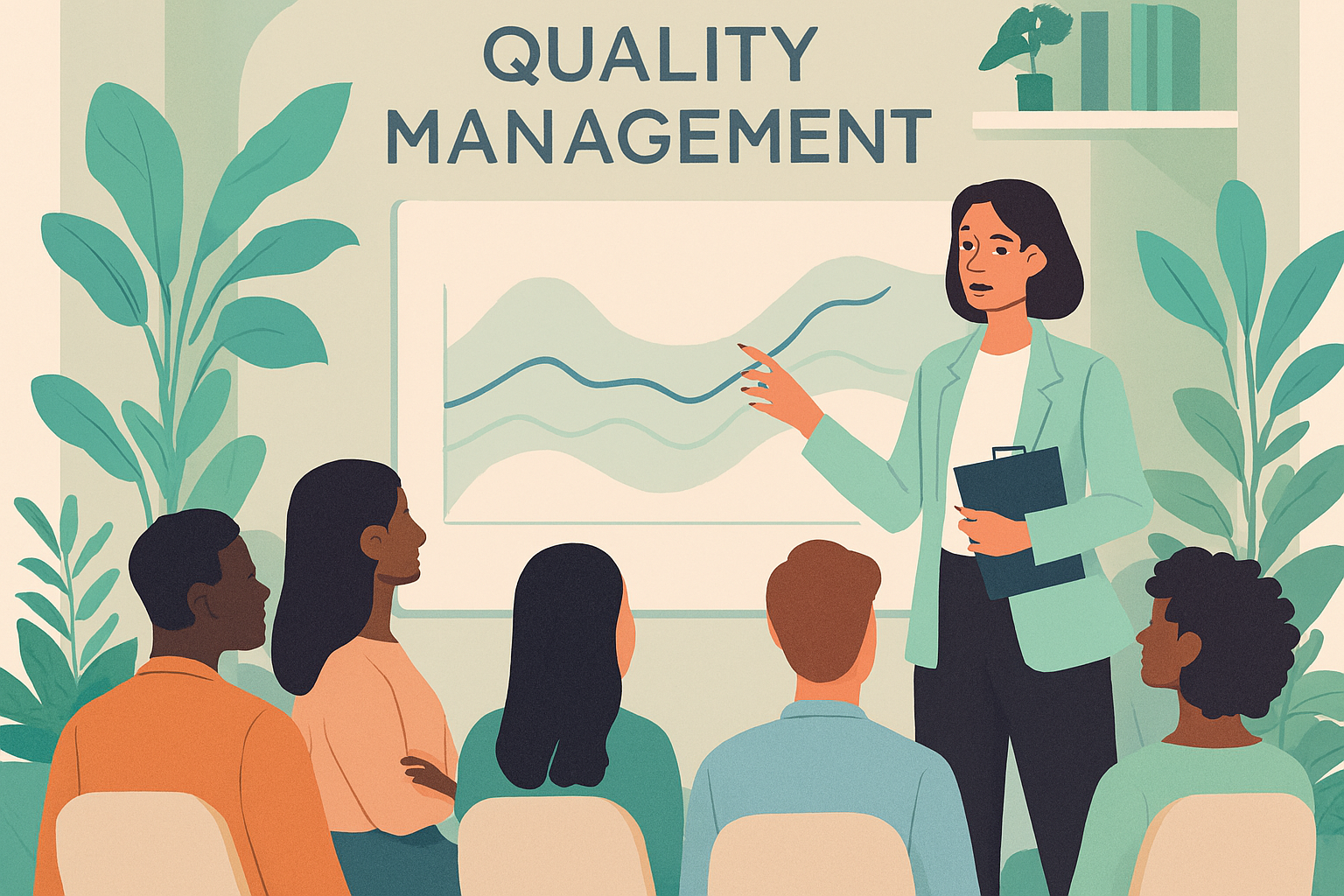
Quality Management Psychology Of Getting The Best Out Of People
Quality Management- Understanding Human Potential And Organizational Excellence
Human psychology and quality management intersect in powerful ways, shaping how individuals contribute to collective success. When organizations understand the psychological drivers of motivation, trust, and recognition, they unlock deeper levels of performance. Quality management provides the structural framework to ensure that these human efforts are directed toward consistent standards and measurable outcomes. Together, they form a system where people feel valued and processes remain reliable. This combination is not accidental but the result of deliberate design, where leadership balances emotional intelligence with technical rigor. By studying both psychology and management, organizations can create environments that encourage innovation while maintaining discipline.
Motivation And Recognition – Driving Human Performance
Motivation is not a simple concept but a layered psychological construct that involves intrinsic and extrinsic factors. People are driven by internal desires such as mastery, autonomy, and purpose, while external rewards like pay, recognition, and promotion reinforce their efforts. Quality management systems must integrate recognition mechanisms that validate contributions without reducing motivation to mere transactions. When employees feel their work is meaningful, they are more likely to sustain high performance even in challenging conditions. Recognition should be timely, specific, and aligned with organizational values to avoid superficial praise. Leaders who understand the psychology of motivation can design systems that balance reward with responsibility. This balance ensures that individuals remain engaged while processes remain consistent.
| Motivation Type | Description | Impact On Quality |
|---|---|---|
| Intrinsic | Driven by personal growth and purpose | Sustains long-term commitment |
| Extrinsic | Driven by rewards and recognition | Boosts short-term performance |
| Social | Driven by belonging and teamwork | Enhances collaboration |
| Achievement | Driven by measurable success | Improves accountability |

Communication And Trust – Building Strong Foundations
Trust is the cornerstone of effective communication, and without it, quality management systems collapse under suspicion and disengagement. Employees must believe that leaders are transparent, fair, and consistent in their actions. Communication is not only about transmitting information but also about listening actively and validating concerns. When trust exists, feedback loops become more effective, and errors are corrected without fear of punishment. Quality management thrives in environments where communication is open and trust is mutual. Leaders must demonstrate reliability through consistent actions, reinforcing the belief that systems are designed to support rather than control. Trust reduces resistance to change and increases willingness to participate in continuous improvement.
- Trust enhances willingness to share ideas
- Communication reduces misunderstandings and errors
- Transparency builds credibility in leadership
- Listening validates employee perspectives
- Feedback loops strengthen quality systems
Leadership Styles And Their Impact On Quality
Leadership psychology reveals that different styles influence how people respond to organizational demands. Transformational leaders inspire through vision and emotional connection, while transactional leaders focus on rules and rewards. Quality management requires a balance between inspiration and structure, ensuring that creativity does not undermine consistency. Leaders who adapt their style to context achieve better outcomes, as flexibility allows them to meet diverse needs. Authoritarian styles may enforce compliance but often reduce innovation, while participative styles encourage ownership and accountability. The psychology of leadership emphasizes empathy, adaptability, and clarity as essential traits. Quality systems benefit when leaders align their style with organizational goals and employee expectations.
| Leadership Style | Psychological Effect | Quality Impact |
|---|---|---|
| Transformational | Inspires vision and purpose | Encourages innovation |
| Transactional | Reinforces rules and rewards | Ensures compliance |
| Authoritarian | Creates fear and control | Reduces creativity |
| Participative | Builds ownership and trust | Improves accountability |
Emotional Intelligence And Quality Outcomes
Emotional intelligence is the ability to recognize, understand, and manage emotions in oneself and others. Leaders with high emotional intelligence create environments where employees feel respected and supported. This psychological skill directly influences quality management by reducing conflict and increasing cooperation. Emotional intelligence allows leaders to respond to stress with composure, maintaining stability in processes. It also enhances empathy, which strengthens relationships and encourages collaboration. Quality outcomes improve when emotional intelligence is embedded in leadership practices. Employees are more likely to engage in continuous improvement when they feel emotionally secure.
- Emotional intelligence reduces workplace conflict
- Empathy strengthens collaboration and trust
- Self-awareness improves decision-making under pressure
- Emotional regulation maintains process stability
- Supportive environments encourage innovation
Continuous Improvement And Human Psychology
Continuous improvement is a principle of quality management that relies heavily on psychological engagement. Employees must believe that their contributions matter and that improvements are recognized. The psychology of ownership plays a critical role, as individuals are more committed when they feel responsible for outcomes. Continuous improvement requires patience, persistence, and resilience, qualities that are nurtured through supportive leadership. When employees see tangible results from their efforts, motivation increases. Quality systems must provide clear pathways for feedback and innovation. The psychological satisfaction of progress reinforces commitment to improvement.
| Improvement Factor | Psychological Driver | Quality Benefit |
|---|---|---|
| Ownership | Responsibility and pride | Sustains engagement |
| Feedback | Recognition and validation | Encourages participation |
| Resilience | Coping with setbacks | Maintains progress |
| Patience | Long-term perspective | Ensures sustainability |
Team Dynamics And Collective Quality
Teams operate on psychological principles of belonging, identity, and shared purpose. Quality management systems must recognize that individuals perform differently in groups than alone. Team dynamics influence communication, trust, and accountability, all of which affect quality outcomes. Leaders must foster environments where collaboration is valued and conflict is managed constructively. Psychological safety is essential, allowing team members to take risks without fear of punishment. When teams function effectively, quality systems benefit from diverse perspectives and collective problem-solving. The psychology of teamwork emphasizes balance between individuality and group cohesion.
- Teams thrive on shared identity and purpose
- Psychological safety encourages risk-taking
- Collaboration enhances problem-solving capacity
- Conflict management strengthens resilience
- Group accountability improves consistency
Feedback Systems And Psychological Impact
Feedback is a psychological tool that shapes behavior and reinforces standards. Constructive feedback motivates improvement, while destructive criticism undermines confidence. Quality management systems depend on feedback loops to identify errors and refine processes. Leaders must deliver feedback with clarity, empathy, and timeliness to maximize impact. Employees who receive supportive feedback are more likely to engage in continuous improvement. Feedback also strengthens trust, as it demonstrates commitment to growth rather than punishment. The psychology of feedback emphasizes balance between recognition and correction.
| Feedback Type | Psychological Effect | Quality Outcome |
|---|---|---|
| Constructive | Builds confidence and growth | Encourages improvement |
| Destructive | Reduces motivation | Weakens performance |
| Timely | Reinforces relevance | Improves responsiveness |
| Empathetic | Strengthens trust | Enhances collaboration |
Collaboration And Shared Responsibility – Enhancing Quality Through Collective Effort
Collaboration is a psychological process that transforms individual contributions into collective achievements. When people share responsibility, they feel a deeper sense of belonging and accountability. Quality management systems thrive when collaboration is embedded into workflows, ensuring that no single person carries the burden of maintaining standards. Shared responsibility reduces errors because multiple perspectives identify potential issues before they escalate. The psychology of collaboration emphasizes trust, respect, and mutual support, which are essential for sustaining long-term performance. Leaders must encourage open dialogue and create structures where responsibilities are clearly defined yet flexible enough to adapt. Collaboration also strengthens resilience, as teams can absorb setbacks more effectively than individuals working alone.
| Collaboration Element | Psychological Effect | Quality Outcome |
|---|---|---|
| Shared Responsibility | Builds belonging and accountability | Reduces errors |
| Open Dialogue | Encourages trust and respect | Improves communication |
| Mutual Support | Strengthens resilience | Sustains long-term performance |
| Diverse Perspectives | Expands problem-solving capacity | Enhances innovation |
Accountability And Psychological Ownership – Sustaining Standards
Accountability is more than a managerial requirement; it is a psychological commitment to uphold standards. When individuals feel ownership of their work, they are more likely to maintain quality without external enforcement. Psychological ownership arises when employees see their contributions as integral to organizational success. Quality management systems must reinforce accountability through clear expectations and transparent evaluation. Leaders should avoid punitive measures, focusing instead on constructive accountability that fosters growth. Ownership strengthens motivation, as people take pride in outcomes they directly influence. Accountability also reduces complacency, ensuring that standards remain consistent across processes.
- Accountability reinforces psychological ownership
- Clear expectations reduce ambiguity in performance
- Transparent evaluation builds trust in systems
- Constructive accountability fosters growth rather than fear
- Ownership strengthens motivation and pride

Learning And Development – Psychological Growth And Quality Enhancement
Learning is a psychological process that fuels both personal growth and organizational improvement. Employees who engage in continuous learning are more adaptable and resilient in the face of change. Quality management systems benefit when learning is embedded into daily routines, ensuring that standards evolve alongside new knowledge. Development programs must address both technical skills and psychological needs, such as confidence and self-efficacy. Leaders play a critical role in creating environments where learning is encouraged and mistakes are seen as opportunities. The psychology of learning emphasizes curiosity, persistence, and reflection. Quality outcomes improve when employees feel empowered to expand their capabilities.
| Learning Factor | Psychological Driver | Quality Benefit |
|---|---|---|
| Curiosity | Desire for knowledge | Encourages innovation |
| Persistence | Commitment to growth | Sustains improvement |
| Reflection | Self-awareness | Enhances decision-making |
| Confidence | Belief in ability | Strengthens performance |
Resilience And Adaptability – Psychological Strength In Quality Systems
Resilience is the psychological ability to recover from setbacks, while adaptability ensures flexibility in changing conditions. Quality management systems must account for the inevitability of errors and disruptions. Employees who are resilient view challenges as opportunities rather than threats. Adaptability allows individuals to adjust processes without compromising standards. Leaders must cultivate resilience by providing support and recognizing effort during difficult times. Psychological resilience strengthens commitment, while adaptability ensures sustainability in dynamic environments. Together, they form the backbone of quality systems that endure over time.
- Resilience transforms setbacks into opportunities
- Adaptability ensures flexibility in changing conditions
- Supportive leadership strengthens psychological resilience
- Recognition reinforces commitment during challenges
- Sustainability depends on resilience and adaptability
Innovation And Psychological Safety – Balancing Creativity With Standards
Innovation requires psychological safety, the belief that individuals can take risks without fear of punishment. Quality management systems must balance creativity with consistency, ensuring that new ideas do not undermine standards. Psychological safety encourages experimentation, which leads to breakthroughs in processes and outcomes. Leaders must create environments where mistakes are treated as learning opportunities rather than failures. Innovation thrives when employees feel secure in expressing unconventional ideas. Quality systems benefit from innovation by evolving to meet new demands and challenges. The psychology of safety emphasizes trust, openness, and support.
| Innovation Element | Psychological Effect | Quality Outcome |
|---|---|---|
| Psychological Safety | Encourages risk-taking | Fuels creativity |
| Experimentation | Builds confidence | Generates breakthroughs |
| Trust | Strengthens openness | Improves collaboration |
| Support | Validates effort | Sustains innovation |
Culture And Values – Psychological Alignment With Quality Principles
Organizational culture shapes psychological behavior, influencing how employees perceive quality standards. When values align with quality principles, individuals internalize expectations and act consistently. Culture provides the emotional framework that guides decision-making and behavior. Leaders must articulate values clearly and reinforce them through actions. Psychological alignment ensures that employees see quality not as an external demand but as an internal commitment. Culture also strengthens identity, creating a sense of belonging that motivates adherence to standards. Quality management systems thrive when culture and values are integrated into daily practices.
- Culture shapes psychological behavior and decision-making
- Values align employees with quality principles
- Internal commitment strengthens consistency
- Identity fosters belonging and motivation
- Integration of culture sustains quality systems
Recognition Systems And Psychological Reward – Reinforcing Quality
Recognition systems are psychological tools that validate effort and reinforce standards. Employees who feel recognized are more likely to sustain high performance. Quality management systems must design recognition mechanisms that are meaningful and consistent. Psychological rewards include not only financial incentives but also verbal praise, career opportunities, and symbolic gestures. Recognition strengthens trust and motivates individuals to exceed expectations. Leaders must ensure that recognition is equitable and aligned with organizational values. Quality outcomes improve when recognition systems reinforce both effort and achievement.
| Recognition Type | Psychological Effect | Quality Outcome |
|---|---|---|
| Financial Incentives | Boosts motivation | Enhances short-term performance |
| Verbal Praise | Builds confidence | Sustains engagement |
| Career Opportunities | Strengthens commitment | Encourages long-term growth |
| Symbolic Gestures | Validates effort | Improves morale |
Engagement And Participation – Psychological Involvement In Quality Systems
Engagement is the psychological state where individuals feel emotionally invested in their work. Participation is the behavioral expression of that engagement, demonstrated through active involvement in processes and decision-making. Quality management systems benefit when employees are not passive recipients of rules but active contributors to improvement. Engagement increases resilience, creativity, and accountability, while participation ensures that diverse perspectives shape outcomes. Leaders must design structures that invite input and validate contributions. Psychological involvement reduces resistance to change and strengthens ownership of standards. When engagement and participation are high, quality systems evolve naturally and sustainably.
- Engagement strengthens emotional investment in work
- Participation ensures active involvement in processes
- Validation of contributions builds trust and motivation
- Ownership of standards reduces resistance to change
- Diverse perspectives enhance quality outcomes
Decision-Making And Psychological Confidence – Ensuring Reliable Outcomes
Decision-making is a psychological process influenced by confidence, clarity, and emotional regulation. Employees who feel confident in their judgment are more likely to make reliable decisions that uphold quality standards. Quality management systems must provide clear guidelines while allowing flexibility for context-specific choices. Psychological confidence arises from training, experience, and supportive leadership. Leaders must encourage decision-making autonomy while offering guidance when necessary. Confidence reduces hesitation and increases accountability, ensuring that processes remain consistent. Decision-making also benefits from collective input, where group confidence strengthens reliability.
| Decision Factor | Psychological Driver | Quality Outcome |
|---|---|---|
| Confidence | Belief in judgment | Ensures reliability |
| Clarity | Understanding of standards | Reduces errors |
| Emotional Regulation | Composure under pressure | Maintains consistency |
| Collective Input | Shared responsibility | Strengthens reliability |
Responsibility And Ethical Psychology – Upholding Integrity In Quality
Responsibility is a psychological commitment to act with integrity, while ethics provide the moral framework for decisions. Quality management systems must integrate ethical principles to ensure that standards are not only efficient but also fair. Employees who feel responsible for outcomes are more likely to uphold integrity even under pressure. Ethical psychology emphasizes values such as honesty, fairness, and respect. Leaders must model ethical behavior to reinforce trust in systems. Responsibility strengthens accountability, while ethics ensure that quality outcomes align with societal expectations. Together, they create sustainable systems that balance efficiency with integrity.
- Responsibility strengthens psychological commitment to integrity
- Ethics provide moral frameworks for decisions
- Honesty and fairness reinforce trust in systems
- Leadership modeling strengthens ethical culture
- Sustainable systems balance efficiency with integrity

Performance And Psychological Drive – Sustaining Excellence
Performance is the visible outcome of psychological drive, shaped by motivation, resilience, and focus. Quality management systems must harness psychological drive to sustain excellence across processes. Employees who feel driven are more likely to exceed expectations and maintain consistency. Drive is strengthened by recognition, purpose, and supportive environments. Leaders must cultivate psychological energy by aligning tasks with individual strengths and aspirations. Performance improves when employees feel their efforts contribute to meaningful outcomes. Quality systems benefit from sustained drive, ensuring that excellence is not temporary but continuous.
| Performance Driver | Psychological Effect | Quality Outcome |
|---|---|---|
| Motivation | Fuels energy and focus | Sustains excellence |
| Resilience | Maintains effort under pressure | Ensures consistency |
| Recognition | Validates contribution | Strengthens commitment |
| Purpose | Provides meaning | Encourages long-term success |
Adaptation And Psychological Flexibility – Meeting Changing Demands
Adaptation is the psychological ability to adjust to new conditions, while flexibility ensures responsiveness to diverse challenges. Quality management systems must evolve alongside technological, social, and economic changes. Employees who are psychologically flexible can adjust processes without compromising standards. Adaptation strengthens resilience, ensuring that systems remain relevant in dynamic environments. Leaders must encourage flexibility by fostering open-mindedness and reducing fear of change. Psychological flexibility enhances creativity, allowing individuals to find innovative solutions. Quality outcomes improve when adaptation is embedded into organizational culture.
- Adaptation ensures relevance in dynamic environments
- Flexibility enhances responsiveness to diverse challenges
- Open-mindedness reduces fear of change
- Creativity strengthens problem-solving capacity
- Embedded adaptation sustains quality systems
Balance And Psychological Well-Being – Supporting Sustainable Quality
Balance is the psychological state where work demands align with personal well-being. Quality management systems must recognize that sustained performance depends on employee health. Psychological well-being strengthens resilience, focus, and creativity. Leaders must design systems that prevent burnout by balancing workload and recognition. Well-being also enhances trust, as employees feel valued beyond their output. Quality outcomes improve when well-being is prioritized, ensuring that performance is sustainable. Balance between work and personal life is essential for long-term success.
| Balance Factor | Psychological Effect | Quality Outcome |
|---|---|---|
| Workload Management | Reduces stress | Prevents burnout |
| Recognition | Validates effort | Strengthens morale |
| Health Support | Enhances resilience | Sustains performance |
| Personal Time | Restores energy | Encourages sustainability |
Legacy And Psychological Meaning – Creating Lasting Quality
Legacy is the psychological desire to leave behind meaningful contributions, while meaning provides the emotional foundation for sustained effort. Quality management systems must connect daily tasks to long-term impact. Employees who feel their work contributes to a legacy are more motivated to uphold standards. Psychological meaning strengthens commitment, ensuring that quality is not seen as a temporary requirement but a lasting value. Leaders must articulate vision and connect it to individual contributions. Legacy creates pride, while meaning sustains motivation. Together, they ensure that quality systems endure beyond immediate outcomes.
- Legacy strengthens motivation through long-term impact
- Meaning provides emotional foundation for sustained effort
- Vision connects tasks to broader goals
- Pride reinforces commitment to standards
- Enduring systems balance immediate outcomes with lasting value
Final Conclusion – Psychology And Quality As A Unified System
The psychology of getting the best out of people is inseparable from the discipline of quality management. Motivation, trust, leadership, emotional intelligence, and resilience all shape environments where individuals thrive. Quality management provides the structure, ensuring that these psychological energies are directed toward consistent standards. Together, they form a unified system that balances human potential with organizational discipline. The result is sustainable excellence, where performance is not only reliable but also meaningful. By integrating psychology and quality, organizations create legacies of trust, innovation, and resilience.
Join The Discussion – Share Your Perspective
How do you integrate psychological principles into your approach to quality management. What practices have helped you sustain excellence while supporting human potential.
#Psychology #QualityManagement #Leadership #Motivation #Engagement #Resilience #Innovation #Culture #Performance #Legacy #OrganizationalExcellence #HumanPotential





Your breakdown of the topic is so well thought out.
This was incredibly useful and well written.
You’ve done a great job with this. I ended up learning something new without even realizing it—very smooth writing!